 Preparing for a Pebble Dash Job: Scaffolding, Neighbours and TimingA little planning makes any pebble dash job run more smoothly. Here is what to expect with scaffolding, neighbours, permissions and the weather.Read more
Pebble dash service · South Wales
Pebble Dash Crack Repair in South & West Wales
Cracks in pebble dash are rarely just cosmetic. We find out why the wall has cracked, cut back to sound render, rebuild the backing coat and re-dash the repair to sit as close to the old finish as we can.
- Free survey
- Clear written quote
- Homes & commercial
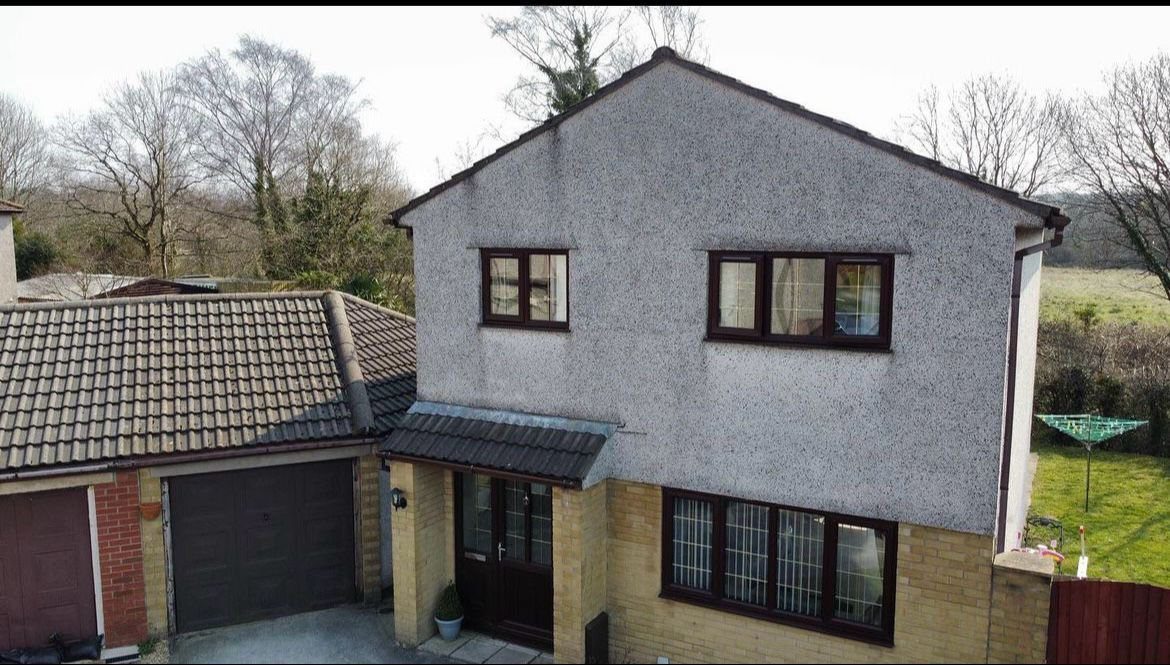
A crack in pebble dash is an open door for rain. Water runs down the face of the wall, finds the gap and soaks into the backing coat behind the stones. When a cold night follows, that trapped moisture freezes, expands and pushes the render away from the brick or block. Over a winter or two a thin line can become a loose, hollow panel that eventually drops off.
We repair cracks in pebble dash on houses and commercial buildings across South and West Wales, from Cardiff and Newport through the Valleys to Swansea, Carmarthenshire and Pembrokeshire. Every job starts with a look at the cause, because filling a crack without knowing why it opened is often money wasted. Some cracks are simple shrinkage in old render. Others follow a lintel, a window corner or a line of movement in the wall that needs a different approach.
Why pebble dash cracks and what to look for
Most cracking we see falls into a few familiar patterns. Fine, map-like crazing usually comes from the render drying too quickly when it was first applied, or from a mix that was too strong for the wall behind it. Straight cracks running out from the corners of windows and doors often point to stress around openings or a rusting steel lintel that has swelled. Horizontal cracks along a floor line can follow the edge of a concrete slab or a change in the wall construction.
Then there is the weather. Houses on exposed hillsides in the Valleys and along the coast take wind-driven rain for months at a time, and that water works its way into the smallest gap. Signs that a crack has already let water in include:
- Dark, damp-looking lines that stay wet long after rain stops
- Render that sounds hollow, or drummy, when tapped
- Stones falling away along the edges of the crack
- Damp patches or blown plaster on the inside of the same wall
How we repair a crack properly
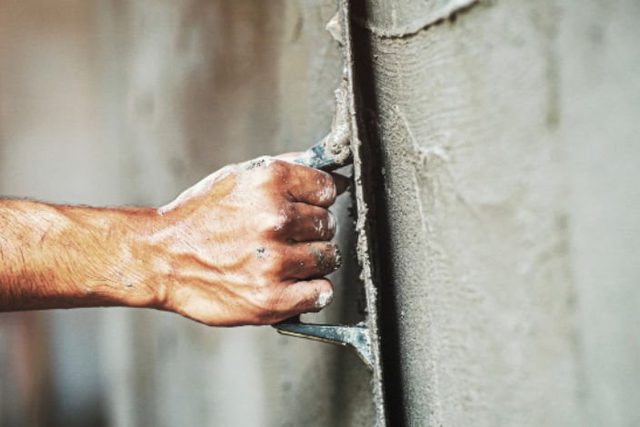
We start by tapping the render either side of the crack. A sound wall rings solid; a hollow note tells us the render has already lost its grip and the repair needs to be wider than the crack itself. Where it is just a fine line in otherwise sound render, we rake it out and fill it. Where the render has come away, we cut back in a neat shape to firm material.
The exposed edges are cleaned and dampened so the new mix does not dry too fast. We build up the backing coat in layers, keeping to a mix suited to the wall rather than something stronger and more brittle. While the final butter coat is still wet, we throw the aggregate on by hand and press it in lightly so it beds well.
If the crack follows a lintel or shows signs of ongoing movement, we will say so plainly. Some movement needs a structural engineer to look at it before any render goes on, and we would rather tell you that than cover it up.
Matching the stones and the colour
The hardest part of a crack repair is often making it disappear. Pebble dash from the 1930s to the 1970s was made with whatever aggregate was local and available at the time, and decades of weather change the colour of both the stones and the render around them. An exact match is not always possible on old dash, and anyone who promises it without seeing the wall is guessing.
What we do is collect a small sample from the wall where it will not show, compare it against the aggregates we can source, and mix up a test patch so you can see it before we commit. Sometimes blending two stones gets closer than any single one. On some walls the honest answer is that a repair will show for a season or two until it weathers in.
If the dash has already been painted, the job is simpler: once the repair has cured we can paint it to match, or paint the whole elevation so the colour is uniform. See our painting pebble dash page for more on that.
When a crack repair is not the right answer
Crack repairs make sense when the rest of the render is sound and the cracking is limited. If tapping the wall shows large areas of hollow render, or cracks run across most of an elevation, patching each one is likely to be a short-lived fix. In that case a larger patch repair or full re-dashing may cost less over the life of the wall.
We also look for problems that will keep reopening a crack no matter how well it is filled. A blocked gutter pouring water down one corner, a leaking downpipe joint, or soil banked up against the base of the wall can all keep a section wet. Fixing those first gives the repair a fair chance.
Timing matters as well. Render needs dry weather and temperatures above about 5°C to cure properly, so in midwinter we may recommend a temporary weatherproof fill and a permanent repair once conditions improve. We will explain the options and let you decide.
Typical crack repairs jobs
- Hairline cracks around window and door openings
- Cracks following rusting steel lintels
- Horizontal cracks along a floor or slab line
- Crazed render on gable ends exposed to the weather
- Cracks where an extension meets the original house
- Hollow render cut back and rebuilt around a crack
- Cracks reopening after a poor earlier filler repair
- Corner cracks on bay windows and porches
Before & after
Examples of our pebble dash work
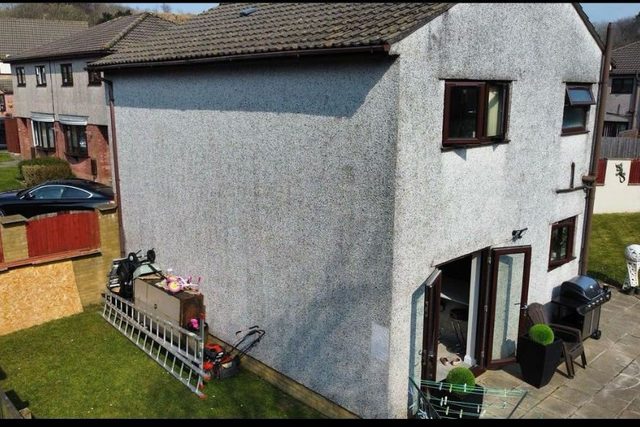 Before
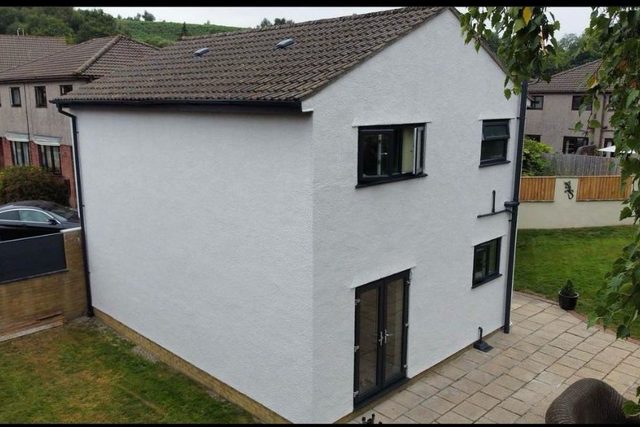 After
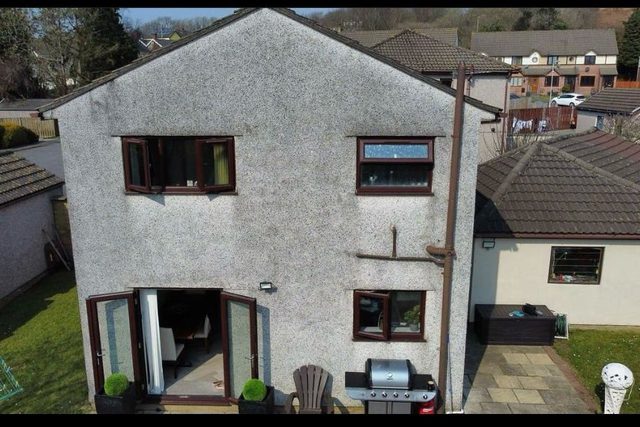 Before
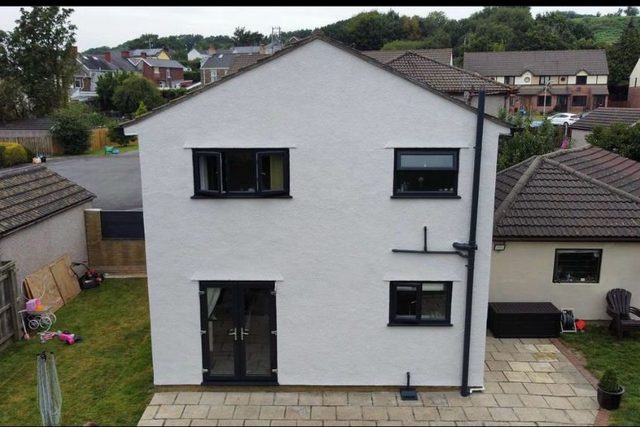 After
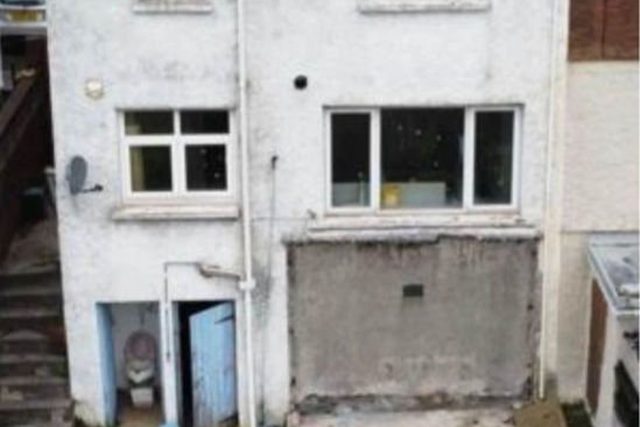 Before
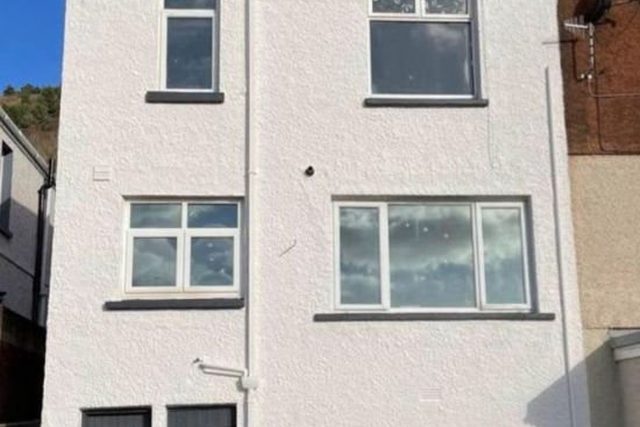 After
Where we work
Crack repairs across South & West Wales
Cardiff & Vale of Glamorgan
Barry · Cardiff · Cowbridge · Llantwit Major · Penarth
Caerphilly & Blaenau Gwent
Blackwood · Caerphilly · Ebbw Vale · Tredegar · Ystrad Mynach
Rhondda Cynon Taf & Merthyr Tydfil
Aberdare · Merthyr Tydfil · Mountain Ash · Pontypridd · Tonypandy · Treorchy
Swansea & Neath Port Talbot
Gorseinon · Mumbles · Neath · Pontardawe · Port Talbot · Swansea
Carmarthenshire
Ammanford · Burry Port · Carmarthen · Kidwelly · Llandovery · Llanelli
Pembrokeshire
Fishguard · Haverfordwest · Milford Haven · Narberth · Pembroke · Pembroke Dock · Saundersfoot · St Davids · Tenby
Ceredigion & Brecon
Aberaeron · Aberystwyth · Brecon · Cardigan · Lampeter
FAQs
Crack repairs: your questions answered
Can I just fill a crack in pebble dash with filler or sealant?
Flexible sealant can buy a little time, but it rarely bonds well to rough dash and it looks obvious. More importantly, if the render around the crack is already hollow, sealant does nothing to stop it coming away. A proper repair cuts back to sound material and rebuilds the render and stones.
Are cracks in pebble dash a sign of subsidence?
Usually not. Most cracks come from shrinkage, weathering or stress around openings. Wide cracks that taper, run diagonally through brickwork, or keep getting bigger are different and should be looked at by a structural engineer or your insurer before any repair. We will tell you if we see anything that concerns us.
Will the repaired crack show?
We aim to make it as close as possible by sampling your existing stones and doing a test patch. On older or weathered dash a perfect match is not always achievable, and a fresh repair can look brighter for a while before it weathers in. If the wall is painted, the repair can be painted to blend.
What affects the cost of a crack repair?
The main factors are how much hollow render surrounds the crack, the height of the wall and whether scaffolding or a tower is needed, how hard the stones are to match, and access around the property. A short visit to tap the wall lets us give you a clear written quote.
Can you repair cracks in winter?
Render needs dry weather above about 5°C to cure, so we avoid frosty or very wet spells. In colder months we can sometimes carry out a temporary weatherproof repair to keep water out and come back to finish the job properly when the weather allows.
Do you repair cracks on commercial buildings?
Yes. We work on shops, flats, offices and rented property as well as private homes. For landlords and housing associations we can survey several properties together and set out which cracks are urgent and which can be grouped into a planned programme of repairs.
Reviews
What customers say about us
Reviews from local customers will appear here.
Had a job done by us? Leave a review — it only takes a minute.
Related services
You might also need
Patch repairsBlown and missing sections of dash patched with stones sampled and matched as closely as possible.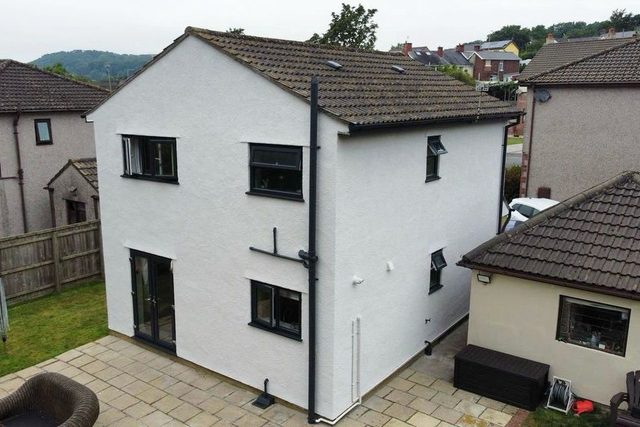 Full re-dashingOld, failing dash stripped back and replaced with a new render and pebble dash finish.
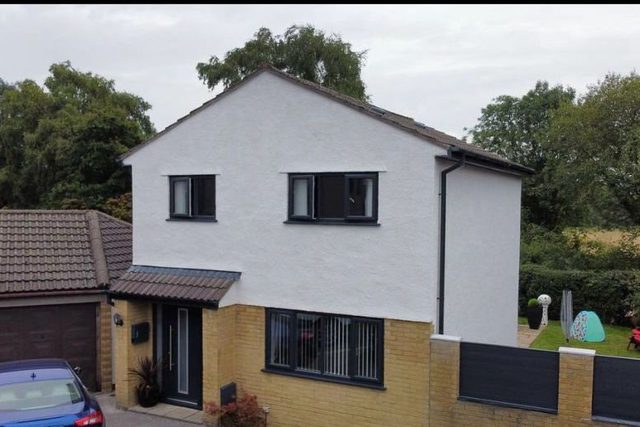 Painting & masonry coatingsCleaning, repairs and breathable masonry paint for an even, refreshed pebble dash finish.
From the blog
Pebble dash advice & guides
Preparing for a Pebble Dash Job: Scaffolding, Neighbours and TimingA little planning makes any pebble dash job run more smoothly. Here is what to expect with scaffolding, neighbours, permissions and the weather.Read more  Why Pebble Dash Cracks in Welsh WeatherRain blown in off the Atlantic, frost on the hills and salt on the coast all test pebble dash. Here is how weather causes cracking, and how to slow it down.Read more
 Can You Paint Pebble Dash? What to Know Before You StartPainting can transform tired pebble dash, but it is a long-term commitment. Here is what to consider, how to prepare and which coatings suit Welsh walls.Read more
 Repair, Re-Dash or Render? Choosing the Right Option for Your WallPatching, re-dashing and re-rendering all have their place. This guide explains when each makes sense, what they involve and the questions to ask before deciding.Read more
 Cleaning Pebble Dash Safely: Why Soft-Washing Beats the Jet WasherAlgae and moss love damp Welsh walls. Here is how to clean pebble dash without blasting the stones off, and how to slow down the green coming back.Read more
 How to Tell If Your Pebble Dash Needs RepairingA walk round the outside of your house can tell you a lot. Here are the simple checks that show whether pebble dash is sound or starting to fail.Read more
Ready to fix your pebble dash?
Free survey and a clear written quote anywhere in South & West Wales.